How much does it cost to run a bread maker?
At the EU average household price of 0.2832 EUR per kWh, a bread maker costs about 0.038 EUR per hour and 0.113 EUR per loaf. Typical use adds up to 5.89 EUR a year, from 1.37 EUR in Turkey to 8.05 EUR in Ireland.
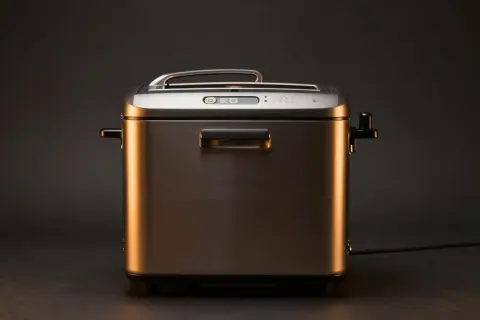
What the numbers assume
- Rated power
- 450 W to 850 W, typical 600 W
- Average draw
- 133 W while in use
- One loaf
- 3 h, 0.3 to 0.7 kWh (typical 0.4 kWh)
- Typical use
- One standard loaf a week, about 3 hours. Most of that time the machine is kneading or proving at low power.
- Per year
- 52 × 0.4 kWh = 20.8 kWh
- Source
- Rated power from bread maker spec sheets (450 to 850 W). Energy per loaf is far below rating times programme length.
About bread maker running costs
The electricity use of a bread maker depends mainly on how much time it spends at higher power. Most of the energy is used during the bake phase, while kneading and proving use far less. A typical loaf uses about 0.4 kWh, but this can vary depending on how long the machine runs and how much power it uses at different stages.
Different households may see different usage because some models run longer or use more power during certain steps. A machine rated at 600 W may use less energy than one at 850 W if both complete a loaf in similar time. The actual energy used depends on the model and how it manages power throughout the cycle.
Bread maker: yearly cost in every country
Typical use, all taxes included. Prices are in EUR so countries can be compared; the UK is converted from the Ofgem price cap at the ECB reference rate.
| Country | EUR/kWh | Per hour | Per loaf | Per year | Bar |
|---|---|---|---|---|---|
| Turkey | 0.0657 | 0.0088 | 0.026 | 1.37 | |
| Kosovo | 0.0869 | 0.012 | 0.035 | 1.81 | |
| Bosnia and Herzegovina | 0.0995 | 0.013 | 0.040 | 2.07 | |
| Montenegro | 0.1039 | 0.014 | 0.042 | 2.16 | |
| Hungary | 0.1139 | 0.015 | 0.046 | 2.37 | |
| North Macedonia | 0.1168 | 0.016 | 0.047 | 2.43 | |
| Albania | 0.1190 | 0.016 | 0.048 | 2.48 | |
| Serbia | 0.1197 | 0.016 | 0.048 | 2.49 | |
| Malta | 0.1268 | 0.017 | 0.051 | 2.64 | |
| Bulgaria | 0.1341 | 0.018 | 0.054 | 2.79 | |
| Croatia | 0.1816 | 0.024 | 0.073 | 3.78 | |
| Moldova | 0.1872 | 0.025 | 0.075 | 3.89 | |
| Slovakia | 0.1985 | 0.026 | 0.079 | 4.13 | |
| Norway | 0.1993 | 0.027 | 0.080 | 4.15 | |
| Luxembourg | 0.2023 | 0.027 | 0.081 | 4.21 | |
| Iceland | 0.2076 | 0.028 | 0.083 | 4.32 | |
| Estonia | 0.2118 | 0.028 | 0.085 | 4.41 | |
| Slovenia | 0.2118 | 0.028 | 0.085 | 4.41 | |
| Lithuania | 0.2162 | 0.029 | 0.086 | 4.50 | |
| Portugal | 0.2367 | 0.032 | 0.095 | 4.92 | |
| Denmark | 0.2375 | 0.032 | 0.095 | 4.94 | |
| Greece | 0.2401 | 0.032 | 0.096 | 4.99 | |
| Latvia | 0.2415 | 0.032 | 0.097 | 5.02 | |
| Netherlands | 0.2440 | 0.033 | 0.098 | 5.08 | |
| France | 0.2485 | 0.033 | 0.099 | 5.17 | |
| Spain | 0.2509 | 0.033 | 0.100 | 5.22 | |
| Cyprus | 0.2688 | 0.036 | 0.108 | 5.59 | |
| Finland | 0.2694 | 0.036 | 0.108 | 5.60 | |
| Romania | 0.2836 | 0.038 | 0.113 | 5.90 | |
| Czechia | 0.2884 | 0.038 | 0.115 | 6.00 | |
| Liechtenstein | 0.2988 | 0.040 | 0.120 | 6.22 | |
| Poland | 0.2999 | 0.040 | 0.120 | 6.24 | |
| Sweden | 0.3062 | 0.041 | 0.122 | 6.37 | |
| Italy | 0.3142 | 0.042 | 0.126 | 6.54 | |
| United Kingdom | 0.3143 | 0.042 | 0.126 | 6.54 | |
| Austria | 0.3260 | 0.043 | 0.130 | 6.78 | |
| Belgium | 0.3575 | 0.048 | 0.143 | 7.44 | |
| Germany | 0.3618 | 0.048 | 0.145 | 7.53 | |
| Ireland | 0.3871 | 0.052 | 0.155 | 8.05 | |
| EU-27 average | 0.2832 | 0.038 | 0.113 | 5.89 |
the same bread maker costs 6.69 EUR more a year in the dearest country
Compared with alternatives
Yearly cost for each appliance's own typical use at the EU average price. Uses differ, so treat this as a rough guide; the comparison pages line them up on the same task.
How to cut the cost of running a bread maker
- Choose a model with a rated power of 450 to 850 W and look for energy-efficient features to keep running costs low.
- Use the machine's low-power settings for kneading and proving to reduce overall energy use during long cycles.
- Clean the bread maker regularly to ensure it runs efficiently and doesn't use extra power to compensate for blockages.
- Make a loaf only when needed and avoid running the machine more frequently than once a week to save energy.
Questions
- How much does it cost to run a bread maker for an hour?
- At the EU average household electricity price of 0.2832 EUR per kWh (Eurostat 2026-S1), a bread maker costs about 0.038 EUR per hour of use. That assumes an average draw of 133 W while it runs. At full rated power of 600 W it would be 0.170 EUR per hour.
- How much does a bread maker cost per loaf?
- One loaf uses about 0.4 kWh, which costs 0.113 EUR at the EU average price. Efficient or small models use around 0.3 kWh (0.085 EUR), large or heavily used ones up to 0.7 kWh (0.198 EUR).
- How much does a bread maker cost to run per year?
- With typical use (one standard loaf a week, about 3 hours) it uses about 20.8 kWh a year. That is 5.89 EUR at the EU average price, from 1.37 EUR in Turkey to 8.05 EUR in Ireland.