How much does it cost to run a gaming PC?
At the EU average household price of 0.2832 EUR per kWh, a gaming PC costs about 0.113 EUR per hour and 0.340 EUR per session. Typical use adds up to 88.36 EUR a year, from 20.50 EUR in Turkey to 121 EUR in Ireland.
What the numbers assume
- Rated power
- 250 W to 650 W, typical 400 W
- Average draw
- 400 W while in use
- One session
- 3 h, 0.75 to 1.95 kWh (typical 1.2 kWh)
- Typical use
- Three hours of gaming on five days a week, tower only. A high-end graphics card can push draw well past 500 W.
- Per year
- 260 × 1.2 kWh = 312 kWh
- Source
- Wall power of mid and high-end gaming PCs under game load (about 250 to 650 W), excluding monitor.
About gaming PC running costs
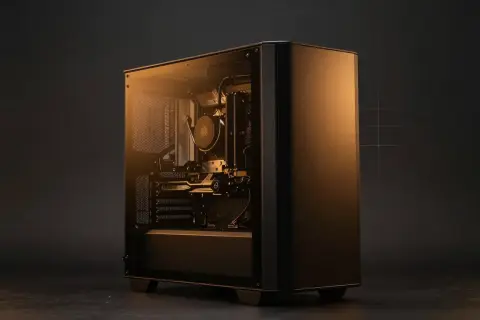
A gaming PC uses electricity to power its internal components, especially the graphics card and central processing unit. High-end graphics cards can use over 500 W during intense gaming sessions, while the rest of the system also adds to the demand. The energy is used for processing game data, rendering graphics, and maintaining performance, which varies depending on the game and settings.
Your usage depends on how often and how intensely you play. A typical session might use about 1.2 kWh, but this can vary between 0.75 and 1.95 kWh based on the game and hardware. Some households may use more if they play longer or use more powerful equipment, while others may use less with lighter games or older hardware.
Gaming PC: yearly cost in every country
Typical use, all taxes included. Prices are in EUR so countries can be compared; the UK is converted from the Ofgem price cap at the ECB reference rate.
| Country | EUR/kWh | Per hour | Per session | Per year | Bar |
|---|---|---|---|---|---|
| Turkey | 0.0657 | 0.026 | 0.079 | 20.50 | |
| Kosovo | 0.0869 | 0.035 | 0.104 | 27.11 | |
| Bosnia and Herzegovina | 0.0995 | 0.040 | 0.119 | 31.04 | |
| Montenegro | 0.1039 | 0.042 | 0.125 | 32.42 | |
| Hungary | 0.1139 | 0.046 | 0.137 | 35.54 | |
| North Macedonia | 0.1168 | 0.047 | 0.140 | 36.44 | |
| Albania | 0.1190 | 0.048 | 0.143 | 37.13 | |
| Serbia | 0.1197 | 0.048 | 0.144 | 37.35 | |
| Malta | 0.1268 | 0.051 | 0.152 | 39.56 | |
| Bulgaria | 0.1341 | 0.054 | 0.161 | 41.84 | |
| Croatia | 0.1816 | 0.073 | 0.218 | 56.66 | |
| Moldova | 0.1872 | 0.075 | 0.225 | 58.41 | |
| Slovakia | 0.1985 | 0.079 | 0.238 | 61.93 | |
| Norway | 0.1993 | 0.080 | 0.239 | 62.18 | |
| Luxembourg | 0.2023 | 0.081 | 0.243 | 63.12 | |
| Iceland | 0.2076 | 0.083 | 0.249 | 64.77 | |
| Estonia | 0.2118 | 0.085 | 0.254 | 66.08 | |
| Slovenia | 0.2118 | 0.085 | 0.254 | 66.08 | |
| Lithuania | 0.2162 | 0.086 | 0.259 | 67.45 | |
| Portugal | 0.2367 | 0.095 | 0.284 | 73.85 | |
| Denmark | 0.2375 | 0.095 | 0.285 | 74.10 | |
| Greece | 0.2401 | 0.096 | 0.288 | 74.91 | |
| Latvia | 0.2415 | 0.097 | 0.290 | 75.35 | |
| Netherlands | 0.2440 | 0.098 | 0.293 | 76.13 | |
| France | 0.2485 | 0.099 | 0.298 | 77.53 | |
| Spain | 0.2509 | 0.100 | 0.301 | 78.28 | |
| Cyprus | 0.2688 | 0.108 | 0.323 | 83.87 | |
| Finland | 0.2694 | 0.108 | 0.323 | 84.05 | |
| Romania | 0.2836 | 0.113 | 0.340 | 88.48 | |
| Czechia | 0.2884 | 0.115 | 0.346 | 89.98 | |
| Liechtenstein | 0.2988 | 0.120 | 0.359 | 93.23 | |
| Poland | 0.2999 | 0.120 | 0.360 | 93.57 | |
| Sweden | 0.3062 | 0.122 | 0.367 | 95.53 | |
| Italy | 0.3142 | 0.126 | 0.377 | 98.03 | |
| United Kingdom | 0.3143 | 0.126 | 0.377 | 98.06 | |
| Austria | 0.3260 | 0.130 | 0.391 | 102 | |
| Belgium | 0.3575 | 0.143 | 0.429 | 112 | |
| Germany | 0.3618 | 0.145 | 0.434 | 113 | |
| Ireland | 0.3871 | 0.155 | 0.465 | 121 | |
| EU-27 average | 0.2832 | 0.113 | 0.340 | 88.36 |
the same gaming PC costs 100 EUR more a year in the dearest country
Compared with alternatives
Yearly cost for each appliance's own typical use at the EU average price. Uses differ, so treat this as a rough guide; the comparison pages line them up on the same task.
Head to head
How to cut the cost of running a gaming PC
- Adjust in-game settings to lower graphical detail and resolution to reduce power consumption during sessions.
- Limit gaming sessions to the recommended three hours per day and avoid unnecessary background processes that increase power use.
- Regularly clean the interior of the PC to ensure proper airflow and prevent the system from running hotter and using more power.
- Choose a power supply unit that matches the typical 400 W requirement rather than opting for an excessively high-rated model.
Questions
- How much does it cost to run a gaming PC for an hour?
- At the EU average household electricity price of 0.2832 EUR per kWh (Eurostat 2026-S1), a gaming PC costs about 0.113 EUR per hour of use. That assumes an average draw of 400 W while it runs. At full rated power of 400 W it would be 0.113 EUR per hour.
- How much does a gaming PC cost per session?
- One session (3 h) uses about 1.2 kWh, which costs 0.340 EUR at the EU average price. Efficient or small models use around 0.75 kWh (0.212 EUR), large or heavily used ones up to 1.95 kWh (0.552 EUR).
- How much does a gaming PC cost to run per year?
- With typical use (three hours of gaming on five days a week, tower only) it uses about 312 kWh a year. That is 88.36 EUR at the EU average price, from 20.50 EUR in Turkey to 121 EUR in Ireland.